A Simple Budget Can Bring More Peace of Mind Than a Bigger Paycheck
Payday often starts with a sense of relief.
The paycheck arrives, bills are paid, groceries are purchased, and perhaps there is enough left for a dinner out or a few online purchases. For a brief moment, everything feels under control.
Then, almost without warning, the next payday seems much closer than expected.
The bank balance has dropped faster than planned, unexpected expenses have appeared, and saving money once again feels like something that will have to wait until next month.
This experience is common across households with very different incomes.
While earning more money certainly helps, financial stability is not determined by income alone. It also depends on how that income is managed.
The challenge is that budgeting often sounds complicated.
Some people imagine detailed spreadsheets, dozens of spending categories, or tracking every dollar spent throughout the month. Those methods work well for some, but they can also feel overwhelming, especially for someone creating a budget for the first time.
This is where the 50/30/20 rule becomes useful.
Instead of focusing on every individual purchase, it organizes spending into three simple categories that are easy to understand and practical to maintain.
The goal is not to restrict every expense.
It is to create a balanced plan that supports today’s needs while preparing for tomorrow.
Understanding the Three Parts of the 50/30/20 Rule
The idea behind the 50/30/20 rule is straightforward.
After taxes have been deducted, monthly income is divided into three broad categories.
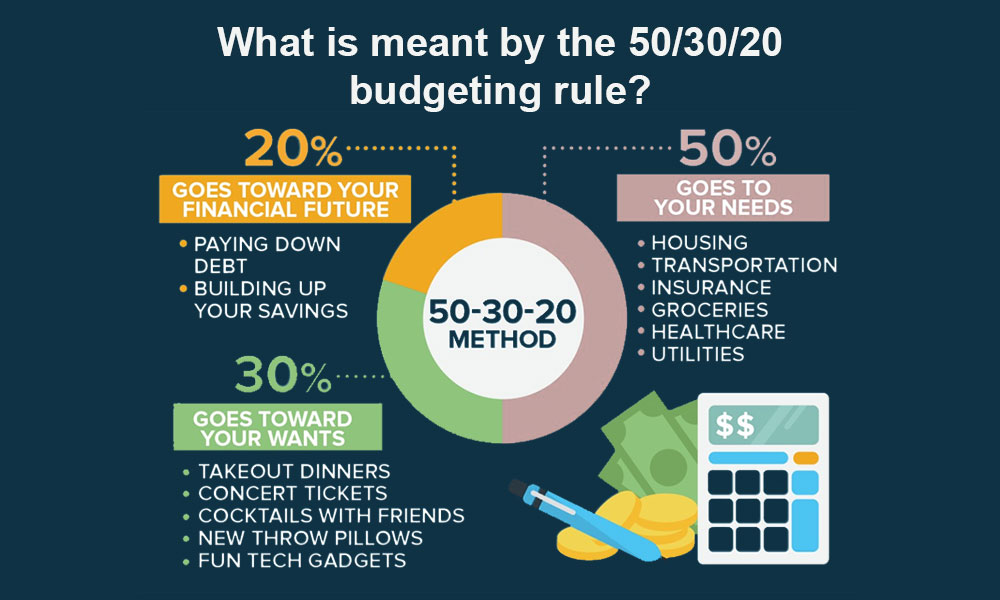
The first category is needs, which generally account for about 50 percent of take-home pay.
These are the expenses that are essential for everyday living.
Housing costs, utilities, groceries, transportation, insurance, minimum debt payments, and other necessary bills usually belong in this category.
These are the expenses that would still need to be paid even if entertainment spending stopped for a while.
The second category is wants, which represents about 30 percent of take-home income.
This is the part of the budget that makes life enjoyable.
Dining at restaurants, streaming subscriptions, vacations, hobbies, concerts, new clothing beyond basic necessities, and entertainment generally fit here.
These expenses are not inherently bad.
In fact, including room for enjoyment often makes a budget easier to maintain because it avoids creating a feeling of constant restriction.
The final 20 percent is directed toward savings and financial goals.
This includes building an emergency fund, contributing to retirement accounts, investing, paying more than the minimum toward debt, or saving for major future purchases such as a home or a vehicle.
Instead of wondering where savings might fit at the end of the month, this approach treats saving as an important financial priority from the beginning.
The percentages are meant to serve as helpful guidelines rather than strict rules.
Every household has different circumstances, and some expenses may require adjustments based on income, location, or personal goals.
Budgeting Becomes Easier When Spending Has a Clear Purpose
Many people avoid creating a budget because they worry it will limit their freedom.
In reality, a good budget often provides more freedom rather than less.
Knowing exactly how much money is available for entertainment, dining out, or hobbies removes much of the uncertainty that often leads to financial stress.
Imagine receiving a monthly paycheck without any plan.
Purchases happen naturally throughout the month. Coffee here, takeout there, a few online orders, and several subscription renewals seem harmless individually.
By the end of the month, however, it becomes difficult to explain where much of the money went.
Now imagine the same paycheck with a simple budget.
Essential bills are covered first.
A specific amount is set aside for savings immediately.
The remaining money becomes available for personal spending without guilt because it has already been planned.
This shift changes the purpose of budgeting.
Instead of constantly asking whether something can be afforded, people begin making spending decisions with greater confidence because they already understand how each purchase fits into the overall plan.
Unexpected expenses also become easier to manage when regular savings have been built into the budget.
Car repairs, medical bills, or home maintenance no longer need to create the same level of financial panic because an emergency fund is gradually growing in the background.
The budget becomes less about restriction and more about preparation.
The Best Budget Is the One That Can Be Followed Consistently
No budgeting system works perfectly for every household.
Someone living in an expensive city may spend more than half of their income on housing alone.
A recent college graduate may choose to dedicate more than 20 percent toward paying off student loans.
Parents raising young children may have priorities that look very different from those of someone living alone.
These differences are completely normal.
The strength of the 50/30/20 rule lies in its flexibility.
Rather than demanding perfect percentages every month, it encourages people to think intentionally about where their money is going.
Reviewing spending regularly helps identify small adjustments that can have a meaningful impact over time.
Perhaps dining out happens more often than expected.
Maybe unused subscriptions continue charging every month.
A lower insurance premium or a less expensive phone plan may free up additional money for savings.
These changes rarely require dramatic sacrifices.
Instead, they come from becoming more aware of spending habits and making gradual improvements.
Technology can also make budgeting much simpler than it once was.
Banking apps, budgeting tools, and automatic transfers allow savings to happen with very little ongoing effort.
Setting money aside automatically each payday reduces the temptation to spend it first and save whatever remains later.
Perhaps the most important lesson is that budgeting is not about achieving perfection.
Some months will include unexpected expenses, holidays, birthdays, vacations, or emergencies that temporarily change spending patterns.
That does not mean the budget has failed.
It simply means life happened.
A budget is meant to adapt as circumstances change while continuing to support long-term financial goals.
The 50/30/20 rule offers a practical way to manage money without becoming overwhelmed by complicated calculations or endless spending categories. By dividing take-home income into needs, wants, and savings, it creates a balanced approach that supports everyday living while encouraging steady financial progress. The exact percentages may vary from one household to another, but the underlying principle remains the same: give every dollar a purpose before it is spent. Over time, this simple habit can reduce financial stress, strengthen savings, and provide greater confidence in managing each paycheck, regardless of income level.